Back in 2020, when the broad-billed hummingbird was a special backyard visitor to Sunshine House (our bright yellow Cajun cottage in Mid-City Baton Rouge), one of the people who reached out to me to see it was fellow birder Katherine G., who emailed me to ask if she and her mom could stop by. Unfortunately, the bird had since departed, but Katherine and I emailed briefly, and she told me of their stay at a place called Canopy Camp, one of three Canopy Family properties in Panama. “It was a trip of a lifetime,” she wrote. “We saw 258 species of birds in 7 days.”
I looked at the Canopy website and daydreamed, but there was so much happening in the subsequent couple of years — Covid, writing a dissertation and finishing my doctorate, returning to teaching — that Panama seemed farther off than just in miles. And with Brian a huge supporter of my passions but not a birder himself, I assumed that a bird-centric vacation would be out of the question.
But when I revisited the idea of vacationing at Canopy Lodge, which looked like it had plenty to offer non-birders as well, Brian agreed! I met with Katherine, who kindly shared her photos and stories with me, and in January, armed with camera gear, passports, vaccinations, bug spray (which we didn’t need), and binoculars, Brian and I headed for Central America.
After clearing Panamanian customs, we were met by a Canopy driver and another couple, physicians from Massachusetts, and off we went. There was a Canopy guide in the van as well, and our first stop was to drop him off at Canopy Tower, a repurposed US military radar tower, now an eco-lodge for birders and nature lovers. We were able to briefly see some gorgeous hummingbirds — White-necked Jacobin and Long-billed Hermit — and then we were off to Canopy Lodge.
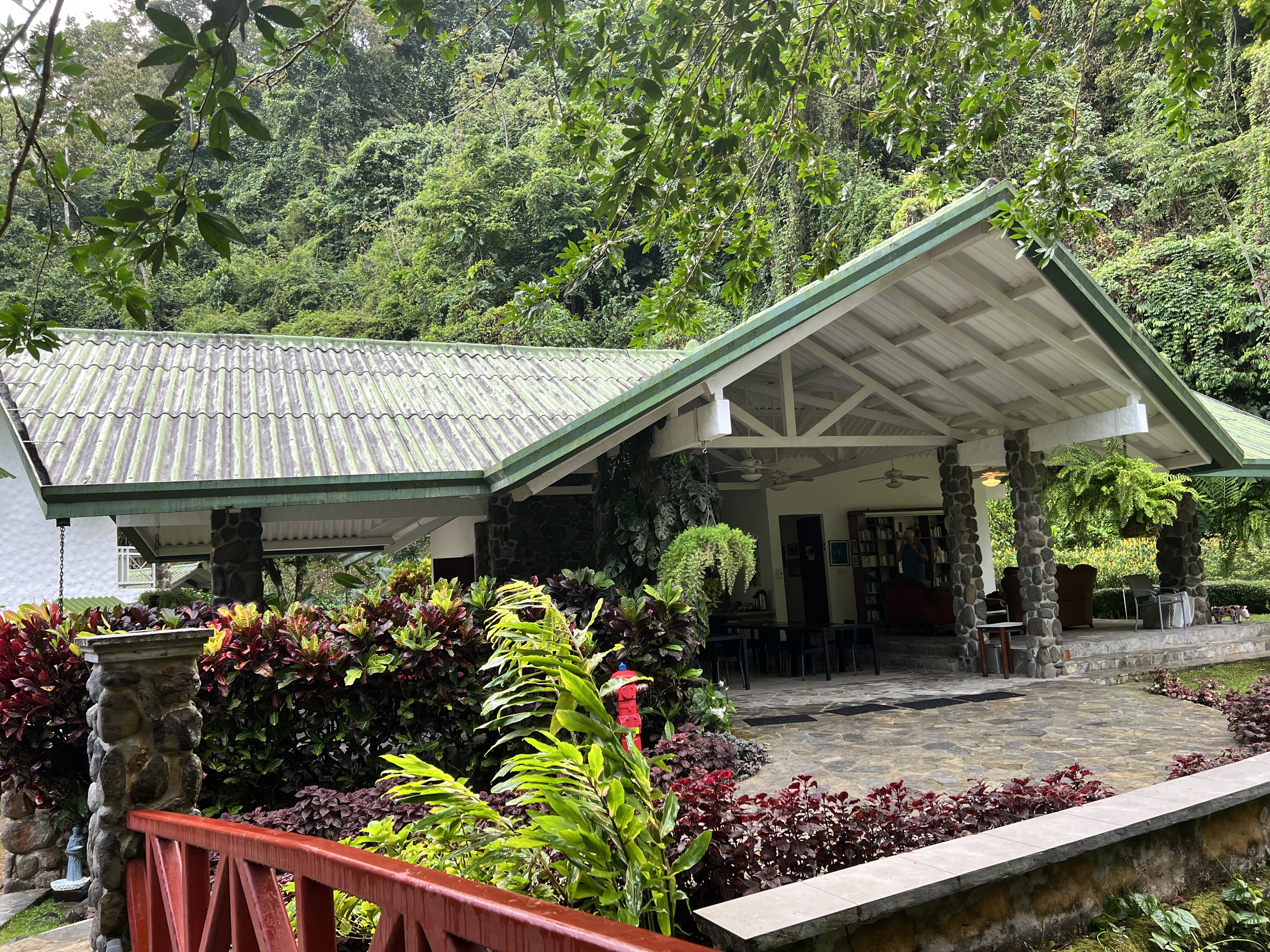
Located in El Valle de Antón, a mountain valley town, Canopy Lodge is surrounded by lush gardens and forest. It is the home to Cornell University’s Panama Fruit Feeder Cam, which I had watched for several years without making the connection that the cams were at the very place we were going! We walked along a stone pathway, and then over a red-railed bridge with a rushing creek underneath, and arrived at the lodge, which consists of a main building with open-air seating/dining areas, and two buildings where the 12 guest rooms are housed.
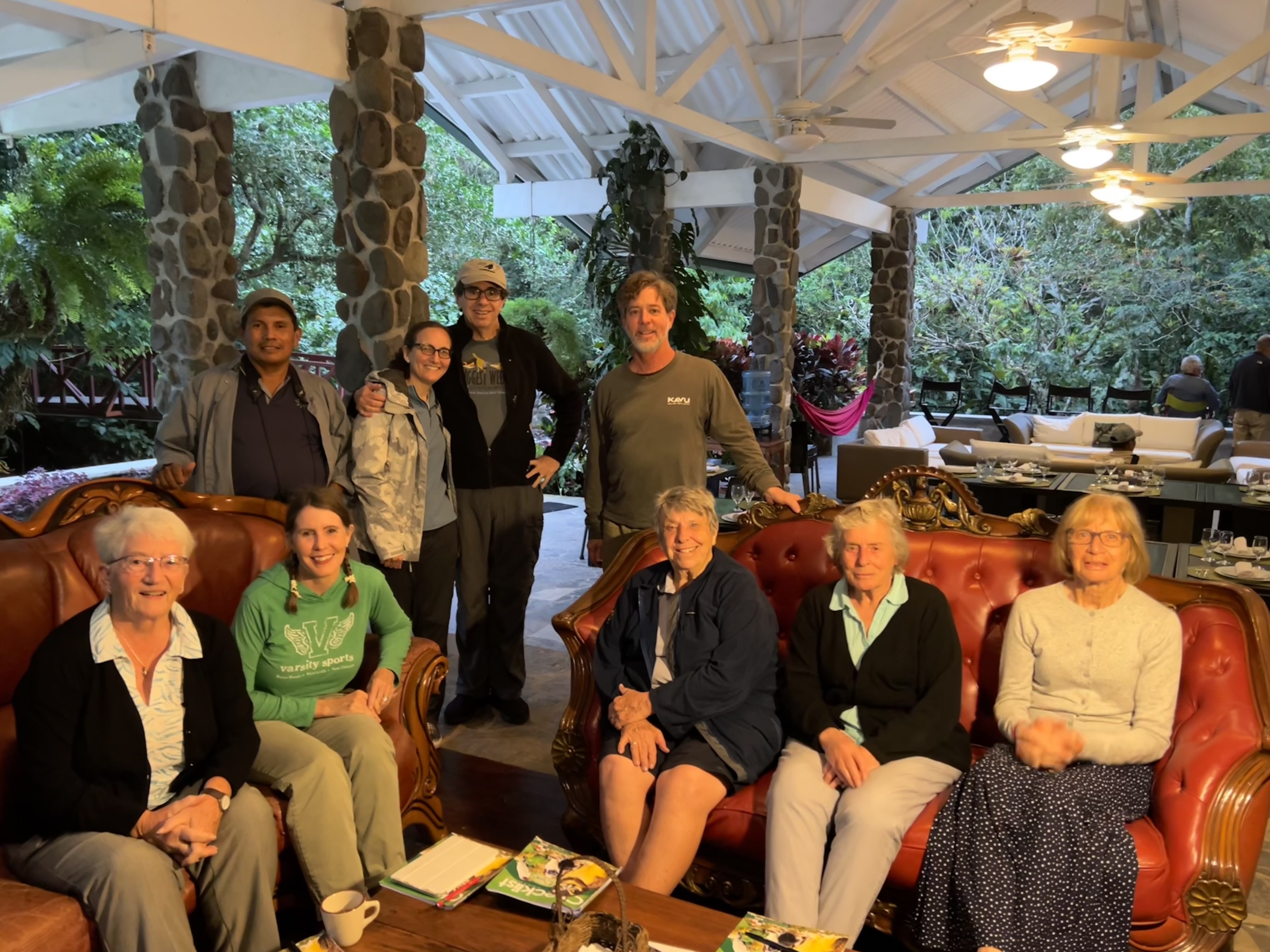
Our luggage was taken to our room, which was quite large, a clean, beautiful and simple room with a balcony open to the tree canopy. As it was getting dark and close to dinner time, we did not have much time to explore, but headed down for our first meal. We said our hellos to the other guests and were quickly taken under the wing of four lovely Englishwomen, all in their mid-late 70s and 80s, with whom we became fast friends.
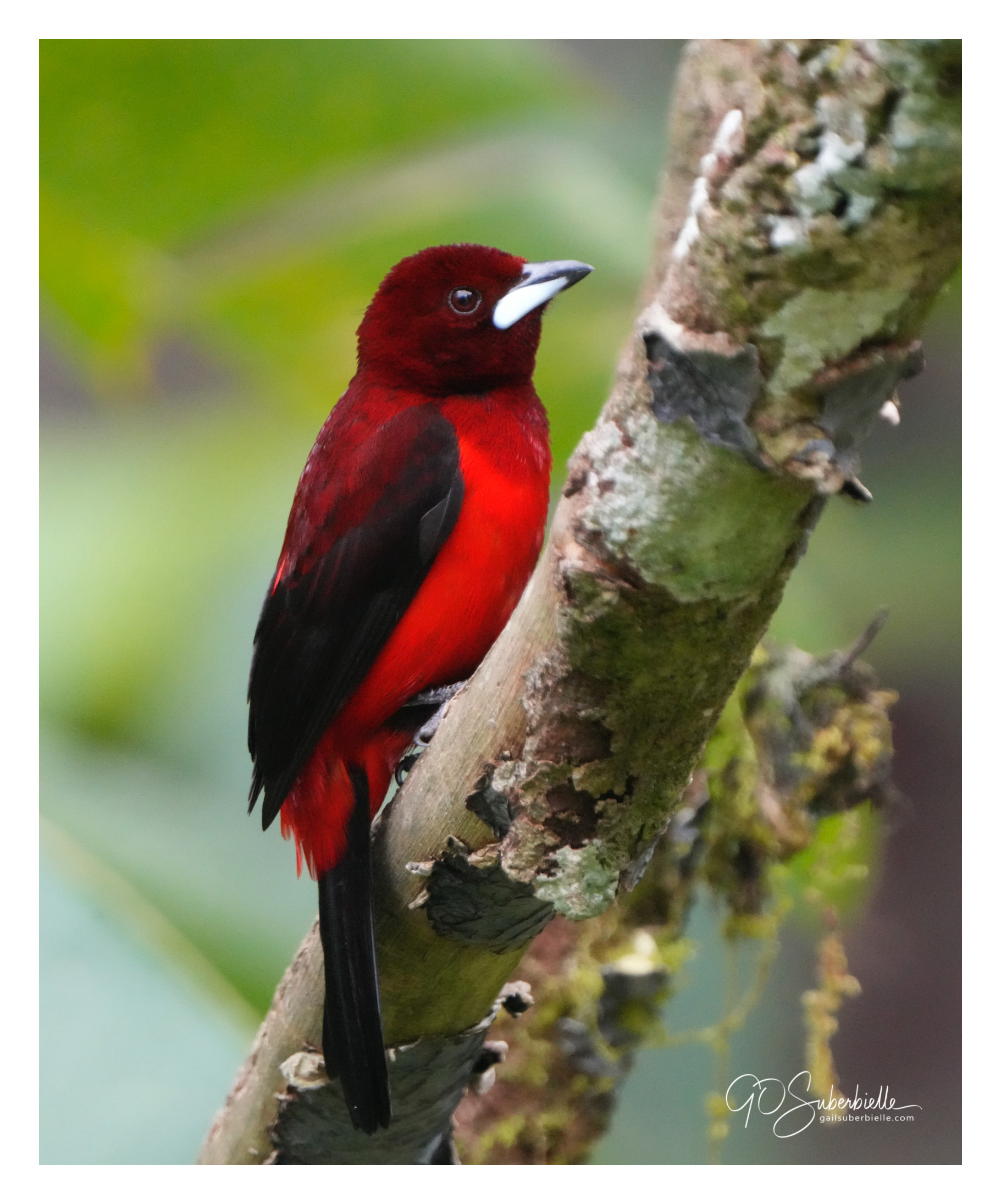
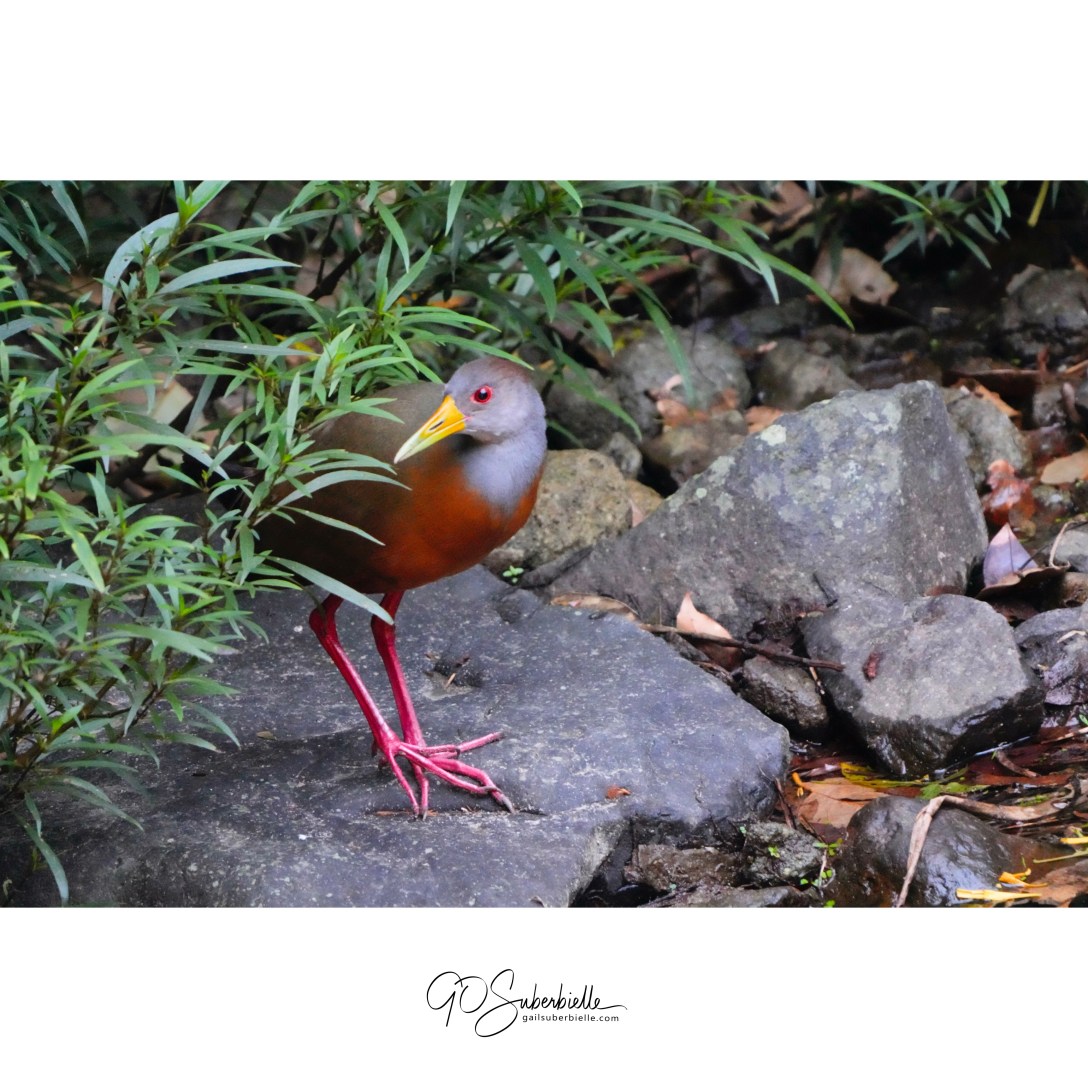
We awakened the first morning to a small flock of Grey-headed Chachalacas in the treetop outside our room. At breakfast, I couldn’t sit still to eat, as there were so many gorgeous birds everywhere, and a family of Central American agouti, a large and interesting rodent. There was so much to see! A green kingfisher zipping just above the water of the creek. Black-chested jays and clay thrushes. Crimson-backed tanagers and other beauties eating fruit at the feeders. Of course I didn’t yet know any of their names, but I scarcely knew where to look!
One element of the trip for which I had much appreciation and awe was the Canopy system of scheduling, whether the guided birding tours, mealtimes, or even clients’ dietary restrictions. Each day would go something as follows:
- 6:30 a.m. breakfast
- 7:30 a.m. leave for birding tour
- 12:30 p.m. lunch back at the lodge
- Siesta until 2:40 p.m.
- 2:40 p.m. leave for birding tour
- 5:30 p.m. return to lodge
- 6:30 p.m. meet with guide/group to review birding checklist
- 7:30 p.m. dinner
Coordinating schedules for three properties must be a complicated, time-consuming system, yet it always went off without a hitch. Our birding group, initially, consisted of Brian and me, the four Englishwomen, and the physician couple. We were led by Danilo Rodríguez, who told us he had been birding since he was 15 years old, and who had been a guide at the lodge since 1998. Over the course of our time at the lodge, we developed a great appreciation for Danilo’s expertise as well as his patience and kindness. I had been given some very good advice by Jane Patterson, a birding expert and president of the Baton Rouge Audubon Society, to make sure to express that I had a combination interest in both seeing and photographing birds, rather than just adding as many as possible to my life list. Danilo did an excellent job of making sure I had opportunities to do both.

We spent the first two days in the La Mesa area a couple of miles from the lodge, birding along the road and some adjacent areas. On the first day, we saw two Keel-billed Toucans in the wild, and as I later wrote Jane, I nearly fainted from happiness! That first day also netted us a sloth sighting, and among many other birds, a Squirrel Cuckoo, Southern Lapwings, and an incredible Blue-headed Parrot, which we saw through Danilo’s scope. That afternoon we were able to see three Spectacled owls … what an experience!
It’s hard to explain how beautiful it was to watch Danilo work, and how hard he worked to find us what we were looking for. We spent one morning in a cloud forest looking for ant birds, which Danilo found by traipsing off the trail, machete in hand, to find a trail of carpenter ants, which naturally led to the birds. We spent several days looking for the elusive White-tipped Sicklebill hummingbird, which we finally saw through the scope because of Danilo’s patience in staking out heliconia (“lobster-claw”) flowers. His ability to spot and scope birds was incredible, and his mimicry of bird calls was fascinating and invariably turned up whatever we were searching. Ever trying to be an “A” student, it thrilled me when Danilo would say “good spot” or “that’s a good bird” if I got the first glimpse of a bird.
On the third day, we took a day-long trip to the Pacific Coast, with many stops along the way, where we saw numerous birds, including a Ferruginous Pygmy-Owl, Tropical Screech Owl, Fork-tailed Flycatchers, Savannah hawk, and Aplomaldo and Peregrine falcons. One of my favorite sights of the entire trip was a pair of Brown-throated parakeets preening each other. Lunch that day was at the gorgeous beach home of Canopy founder/owner Raúl Arias de Para, where a chef prepared us lunch and we could watch fishermen bringing in their catch and Magnificent Frigatebirds soar overhead.
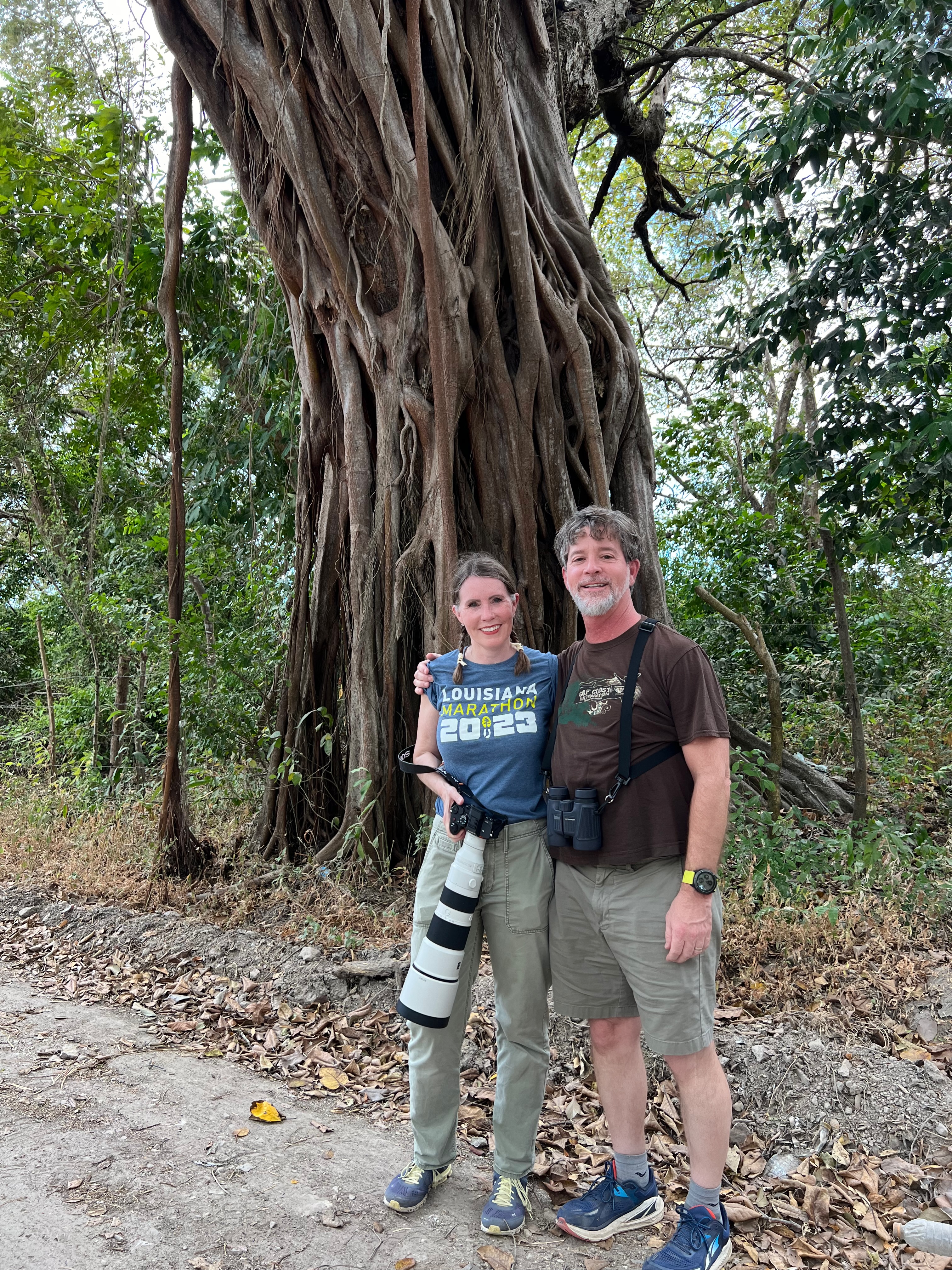
Day four was just us and the other couple, as our other birding buddies had departed for the next leg of their journey. In the morning, we looked for more ant birds in the cloud forest after a hike through some rugged trails (and one terrifying rope suspension bridge) in Canopy Adventure. We saw the incredible Rufous-crested Coquette hummingbird that morning, and in the afternoon, we saw Barred Antshrikes, many flycatchers, and an area full of migratory warblers — golden-winged, black and white, black-throated green, yellow, and chestnut-capped, among others.
On the final day, our physician friends were sent on an all-day tour with another group, and we were joined by some newly arrived birders to visit Cerro Gaital in the morning and Valle Chiquita in the afternoon, where we were treated to Yellow-backed Orioles and male and female White-shouldered Tanagers. We saw a tree full of Chestnut-headed Oropendola and their nests, and a parasitic Giant Cowbird entering one of the nests, presumably to lay eggs.
In the afternoons when everyone was resting before the second outing of the day, I would go wander around the lodge property by myself to see what I could find, too keyed up and afraid I would miss something. One afternoon Raúl was on the property, and I had a long and enjoyable one-on-one conversation with him about the Canopy Family history, and he pointed out a large basilisk or “Jesus Lizard” lazing on a rock in the creek, It was very windy the first few days we were there, and one day was rainy and fairly cool. I think that day was Brian’s favorite, as we hiked through the forest in misting rain.
I can’t say enough about the trip, the lodge, the staff, Danilo, and the new birding friends we made along the way. Our companions were smart, lovely, funny, and interesting, the staff friendly and accommodating, the lodge beautiful and impeccably kept. Altogether, I think we saw upwards of 180 different species of birds in five days, all but 30 or so of them “lifers.” We have pledged to stay in touch with our original birding group and share stories of our future adventures, or perhaps make some future birding memories with them. Brian loves to watch me “in my element,” as he says, and one of my favorite parts of the trip was watching him enjoying the outings, too. I think in the end he had a much better time than he thought he would — maybe I can coax him into another birding vacation one day! If Panama is on your travel bucket list, I’d highly recommend the Canopy Family, and I hope we will one day return to a place that will forever be in our hearts and minds.

 Gail Suberbielle Photography